
For operations managers
Every fire lands on your desk. Most of them started in a spreadsheet.
Nexus puts the jobs, the stock, the people and the equipment in one workspace, so you see the problem while there's still time to fix it.
From a one-shift shop to an operation across several sites.
Half the day goes to finding out.
The operations manager in the office next to mine spent the first three hours of every day in status meetings and walking the plant for updates. A few hours of real work, then the same rounds again as second shift came in. Nobody was hiding anything. The answers just lived in different places.
- The schedule lives in one system.
- Stock lives in another, or on a clipboard.
- Who is certified on what lives in someone's head.
- Licenses and service contracts live in an inbox, if anyone kept the email.
Every gap between them turns into a late job, a part bought twice, or overtime nobody planned.
One record for the work, the stock and the people who deliver it.
When a part is short, the people on the task are warned the moment it is attached. When someone is booked past their week, they and their manager hear about it before the week starts. There is nothing to reconcile, because nothing gets copied from one system to another.
Your week, in Nexus
- 01
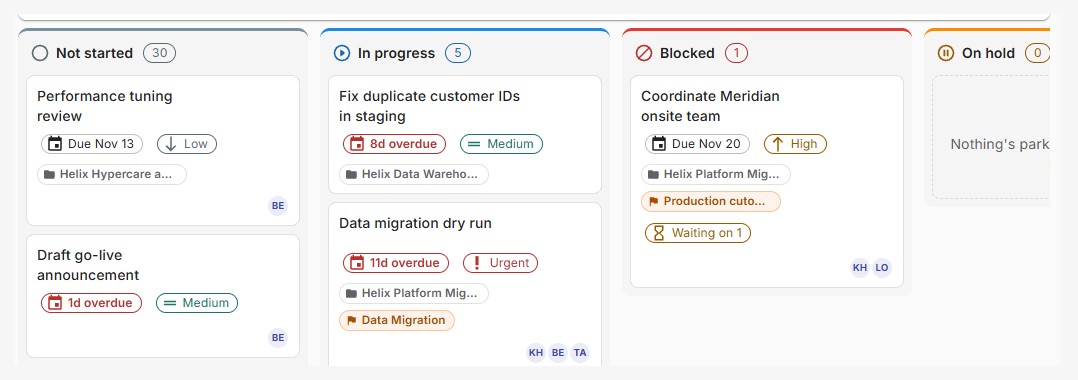
Catch the slip before the customer does.
Home opens on what's overdue and due today, with late work flagged in days. On Enterprise, drift alerts warn you a job is slipping before the due date arrives.
- 02
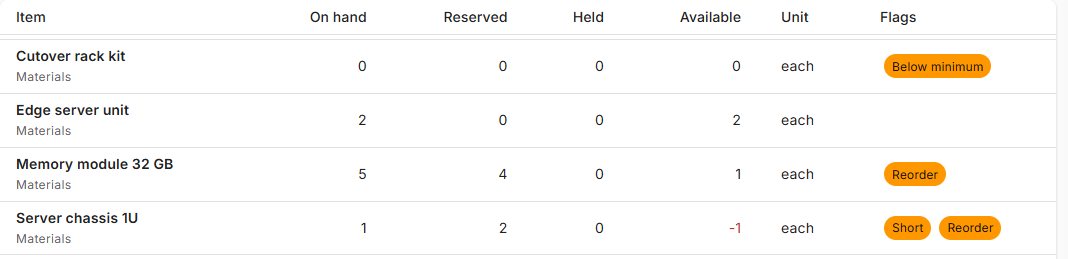
Never start a build you can't finish.
Every item shows on hand, reserved and available. Attach a part to a task without enough stock and the task owner and contributors are warned at once, with how many are needed against how many are available. If stock later drops below its reorder level, everyone on an open task holding that part hears about it too.
- 03
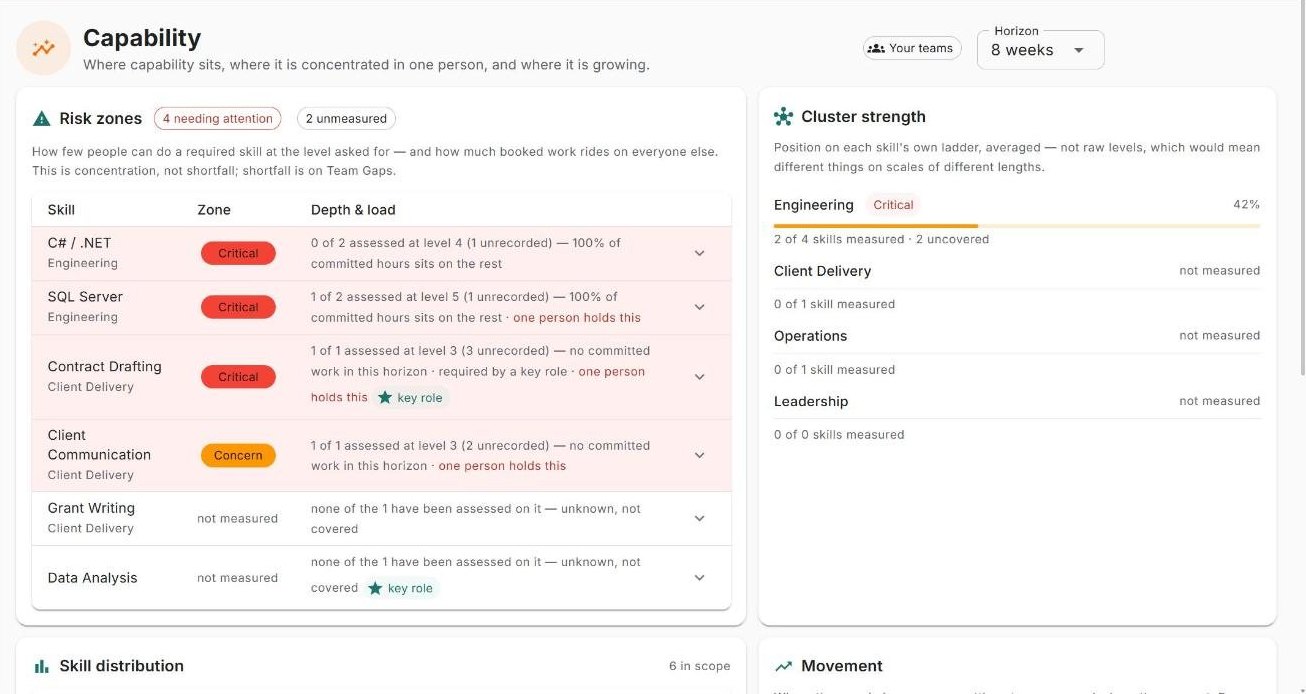
Train the backup before you need one.
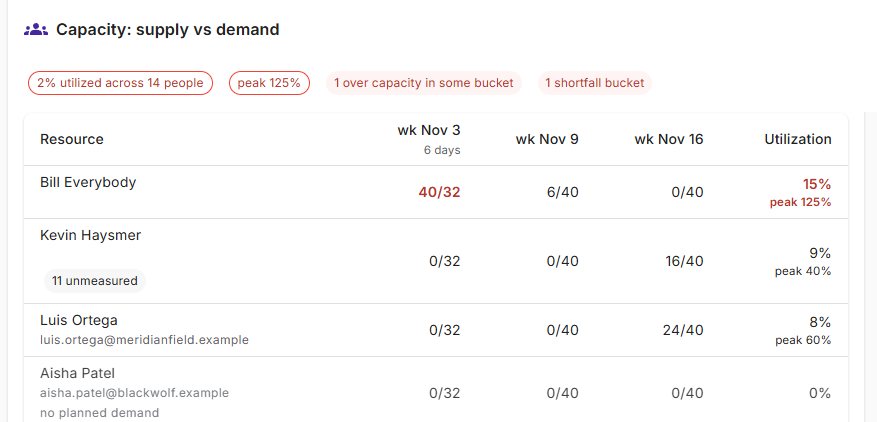
The capability heatmap shows the skills that rest on one person, and Capacity shows who has room this week, so a vacation or a resignation doesn't stop a line.
- 04
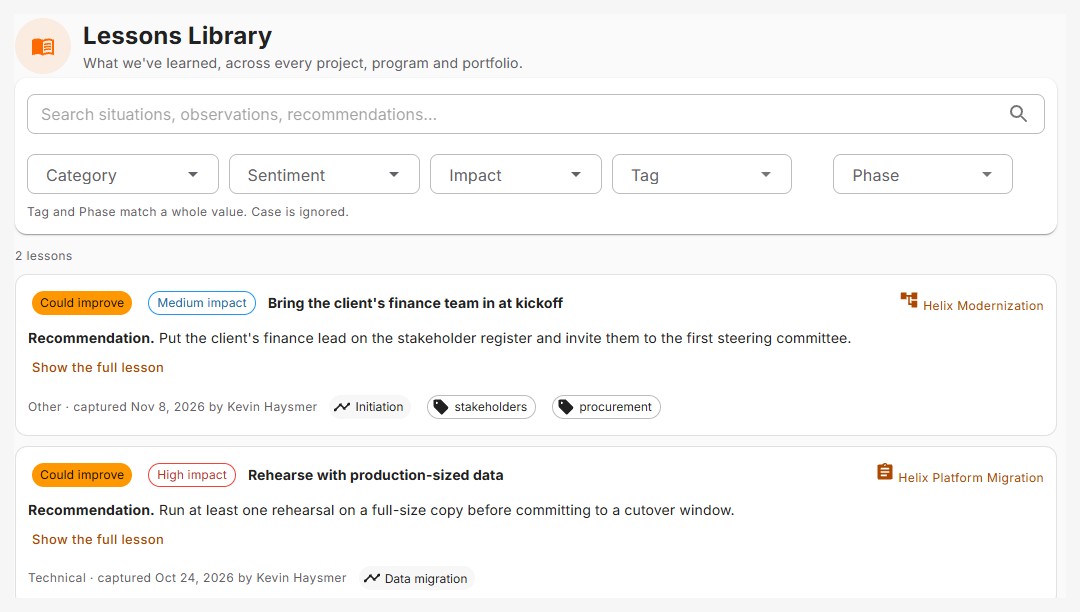
Fix it once.
Issues and changes go in a register with an owner and an approval. Lessons from every job stay searchable, and recurring work carries its checklist and materials forward, so the fix becomes the routine.
- 05
See the overload before it becomes overtime.
Each night Nexus checks the coming week. Anyone booked past their capacity gets one notice, and so does their manager, with how far over they are. Hours are logged on the task they belong to, with no timesheet to chase, and automation rules tag overdue or blocked work for you.
A real one
Three departments. One machine. Nobody owned it.
At an auto manufacturer, a quality test system with its own specialized software went down. IT thought the department had the software. The department thought IT had it. Maintenance was supposed to be paying for support, and Quality assumed the service visits happened after hours, which is why nobody ever saw one.
The vendor sent a copy once we proved our license. That's when we learned the maintenance plan hadn't been paid in three years. The bill was $60,000 in back fees, then $40,000 more to bring the license current. Nobody on site was certified to configure the system anymore, so we waited for the vendor's technician.
For almost a month, every quality check in the plant ran on one machine instead of two, and every production release waited in that line.
Why operations managers choose Nexus
Each one with the plan or suite it comes with. Mix seat levels in one workspace, so only the people who need a feature pay for it.
- Status without the walk Boards, Home and recurring work show where every job stands.Free
- Nothing falls off the radar Equipment, licenses and subscriptions with files, renewal dates and reminders.Free
- Problems with an owner Risk, issue and change registers, with approvals.Free
- Overload you can see coming Capacity and workload, with a notice when someone is overbooked.Basic
- Builds that don't stall Stock reserved on attach, with short-stock warnings to the people on the task.Pro
- Busywork that runs itself Automation rules and workflows.Pro
- Fixes that stay fixed The Lessons Library, searchable across every job.Pro
- Early warning Drift alerts and burnout indicators.Enterprise
- Stock you can count on Receiving, lots and serials, scanning and counts.Inventory Suite
- No single point of failure The capability heatmap.Talent Suite
- Run a shop floor? See Nexus for manufacturing
- Rather watch? Take the Inventory Suite tour
- Comparing tools? See how Nexus compares
Bring the fire you fought last week.
In 20 minutes I'll show you where it would have shown up in Nexus.